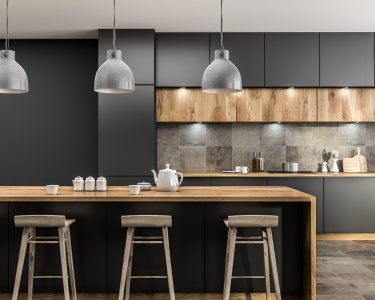


Framing it as refacing versus replacement is actually the wrong question. Determining what your cabinets need has less to do with pitting ideas against one another and more to do with the cabinets’ conditions themselves. If the cabinet boxes are sound and work within the established layout, kitchen cabinet refacing refreshes the look without rocking the boat too much. But if the boxes are compromised or clash with the rest of the layout, replacement is the better move.
None of this is something you’d have to pay someone to check. Just pull open some of the doors, press on some of the interior panels, and see how well the frame holds its shape. Of course, a contractor doing custom cabinetry work can confirm it formally, but the checks below cover most of what determines the answer.
What Kitchen Cabinet Refacing Actually Involves
What Gets Replaced vs. What Stays
Refacing replaces the parts of the cabinets you face, the doors, drawer fronts, hinges, and hardware. It doesn’t touch the cabinet boxes, face frames or interior shelving. The exposed sides and face frames get covered in a thin veneer that matches the new doors, so the whole cabinet looks new even though most of the internals haven’t been touched.
Materials Used in Refacing
The veneer applied during refacing is a thin layer of wood or laminate bonded to the existing face frame. It may seem like just a cosmetic patch, but it’s designed to stand up to kitchen conditions. Cabinet installers featured in This Old House’s refacing coverage note that particleboard is standard practice for the interior base and partition components of most cabinets, refaced or not. That’s how cabinet boxes have been built for decades, and the refacing process cares less about the material itself and more about whether that material has stayed dry and structurally intact.
What Full Cabinet Replacement Involves
Why Homeowners Choose Replacement
Replacement means new boxes from the ground up. This opens the door to kitchen layout changes and possibly new dimensions that couldn’t exist under the old setup. A wider drawer bank, a pull-out pantry, and an island with seating on one side all require new boxes, because the box is what determines the interior dimensions.
What Changes That Refacing Can’t Touch
This is where a lot of refacing regret comes from. Refacing gives you new doors on the same footprint, in the same kitchen layout, with the same storage configuration. If the actual complaint is “I don’t have enough drawer space” or “the fridge is in a bad spot,” refacing just puts a better-looking mask over the same problem.
Is Kitchen Cabinet Refacing Right for Your Cabinets?
Box Condition: The Deciding Factor
The deciding factor really comes down to whether the existing boxes are still structurally sound, which is exactly what Home Depot’s guide to choosing between a cabinet makeover and new cabinets centers on. This Old House’s contractors use a simple visual check when assessing a kitchen for refacing. They look at how the doors currently hang. Doors that sit flush and even usually mean the box behind them is square and stable. Doors that sag, stick, or sit unevenly usually mean the frame itself has shifted. Refacing can’t fix that because the new doors still have to hang on that same frame.
Cosmetic Wear vs. Structural Problems
Dated wood tone, worn hardware, chipped laminate, and doors that just look old are cosmetic problems. The exact use case for refacing. On the other hand, cabinets that feel soft or spongy to the touch, boxes that visibly aren’t square, and saggy drawers are structural issues that require replacement. No amount of surface-level cosmetic changes can fix that.
If a kitchen is undergoing a full makeover anyway, incorporating new appliances and custom kitchen designs, it’s usually better to replace the cabinets instead of reface.
Signs Kitchen Cabinet Refacing Won’t Be Enough
We’ve established that the biggest factor in the refacing versus replacement decision is the structural condition of the cabinets. If that structure is compromised, no amount of refacing can fix the underlying issue. Here are some additional signs the internal structure of your cabinets might be compromised:
- Soft or swollen panels – this is a sign of water exposure
- Crumbling particleboard – the structure itself is crumbling
- Persistent musty odors – these signal moisture trapped inside the box
- Visible warping – the structure is failing at certain points.
All these are very common in older homes. Contractors doing kitchen remodeling in Sullivan’s Island, Mount Pleasant and other historic neighborhoods regularly work with original cabinet boxes that have simply outlived the kitchen layout they were built for.
Even if the boxes themselves are fine, frustration with your kitchen layout is just as valid a reason to replace. That tiny galley kitchen will remain tiny if you reface the cabinets without making any other changes.
How Long Each Option Takes
Refacing is fast because the boxes never leave the kitchen. Most refacing jobs run 3 to 5 days from start to finish. Replacement takes longer because the old cabinets need to be fully removed, new ones have to be manufactured then installed. Full replacement projects commonly run 8 to 10 weeks door to door.
Kitchen Cabinet Refacing or Replacement: A Simple Decision Framework
The easiest way to decide between refacing and replacement is to ask yourself two questions:
- Are you happy with the layout beyond how it looks?
- Are the boxes structurally sound, dry, and stable when checked by hand?
If the answer is yes to both, refacing is your best bet. If the answer to either is no, replacement is usually a better option.
If replacement is the answer, a kitchen remodeling contractor can evaluate layout and storage at the same time as box condition. Since the boxes are being rebuilt anyway, that’s also the moment to look at current kitchen design trends instead of choosing doors for a layout that may no longer make sense.
Frequently Asked Questions
Can you reface really old cabinets?
Often, yes. Cabinet age matters less than cabinet condition. Many older cabinets were built with solid wood face frames that are structurally sound decades later. The deciding factor is whether the boxes are square, dry, and free of water damage, not how old they are.
Does cabinet refacing look as good as new cabinets?
Visually, a well-done refacing job is difficult to distinguish from new cabinetry, since the doors, drawer fronts, and visible surfaces are all genuinely new. What doesn’t change is the interior layout and storage configuration, which stays identical to what existed before.
How long does cabinet refacing last?
A quality refacing job typically holds up well for years beyond the initial installation, since the new doors and veneer are built to the same standards as new cabinetry. Full replacement with quality materials tends to last longer still, largely because the entire structure, not just the surface, is new.
Can you replace just a few damaged cabinets and reface the rest?
Sometimes, if only one or two boxes are compromised while the rest are sound. It requires matching new box construction closely enough that the refaced veneer looks uniform across old and new sections, which isn’t always straightforward depending on how discontinued the original cabinet line is.
Does refacing work for painted or laminate cabinets?
Yes, refacing works across most existing finishes since the process covers the face frame and sides in new veneer regardless of what’s underneath. The condition of the box matters far more than what material or finish is currently on it.
The Two Questions That Actually Decide This
Most refacing regret starts the moment you skip the box check. Cosmetic work gets done on cabinets that were already failing structurally, and replacement ends up happening anyway a year or two later, on top of what refacing already cost. The frame either holds or it doesn’t, and that answer doesn’t change based on how good the new doors look on top of it.
Sources
How to Choose Cabinet Makeover or New Cabinets — The Home Depot
Cabinet Refacing: Everything You Need to Know — This Old House