

Quick Answer
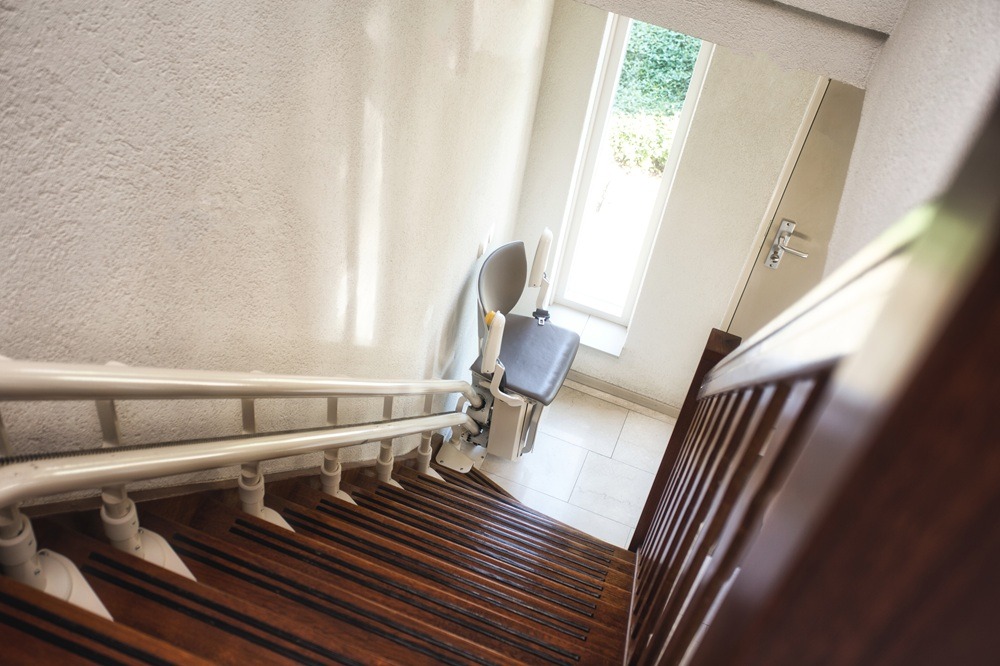
At both ends of the stairs, the person using the lift rehearses the transfer with a walker or cane nearby. An installer measures the stairs and the floor area around the chair. Someone then stands and moves away from the seat while another person watches the doorway. A nearby handrail also takes up room around the chair.
Stairlift Installation Starts at the Narrowest Point
Trim, posts, and a handrail reduce usable stair width even when the treads look generous. During the visit, a caregiver leaves the walker open beside the bedroom door while helping someone move around upstairs. Painter’s tape marks where the chair will stop while someone opens a nearby door through its full swing.
An installer measures the narrowest point and the floor area at both ends. A door that crosses the tape changes the usable floor area at the end of the stairs. For the measurement, the walker stays open so the installer sees how much room someone has to turn.
The Chair Needs Room After the Last Step
Upstairs, a swivel seat can face the hall while someone puts both feet on the floor. Reaching a walker sometimes requires another half turn. And when the bedroom door opens toward the stairs, someone may have to stop before reaching the walker.
Whoever already helps with personal care sees how the person pushes up from a chair. They point out whether the person normally asks for elbow help. For the rehearsal, a chair near the top of the stairs stands in for the stairlift seat. Painter’s tape marks where the helper’s feet need to go.
At the lower end, a narrow front hall leaves little room to turn toward a cane. Opening a closet or entry door as part of the rehearsal shows whether the door crosses the transfer path. Someone then practices the first step away from the stairlift seat with the cane in reach.
Existing Handrails Can Complicate Stairlift Installation
If the rail moves, someone who relies on it has to reach to a new spot. An installer should measure before anyone removes the rail. ASME’s A18.1 safety standard covers stairway chairlift installation and inspection. Families can ask which code edition and local rules apply to the work.
Outlet location affects where the charger sits. An installer also checks trim or furniture that interferes with access. During a visit, family members check stair lighting and space beside the folded seat as part of aging-in-place design. Someone who still uses the handrail needs enough space to reach the rail beside the folded seat.
During a major remodel, families may still have time to widen the stairway before crews finish the walls and trim. NAHB, the National Association of Home Builders, uses a four-foot minimum for future lift space in multistory homes. Before drywall goes up, a builder can compare the four-foot layout with the selected lift’s measurements.
A Walker Beside the Bedroom Door Can Block the Turn
An open walker beside an upstairs doorway takes up floor area a caregiver uses during the transfer. A person who always turns toward the bedroom needs that side of the hall clear. If the walker waits on the bedroom side, someone may have to move it before taking another step.
A caregiver who helps someone move safely around the home may already know whether the person pauses after standing. During the rehearsal, the caregiver stays in the usual helping position until the person starts walking.
Questions That Come Up Before Stairlift Installation
How Much Space Does a Stairlift Need?
Space varies by unit and stair layout. Families can ask whether the rail extends past the first or last step on the selected model.
Should Nearby Furniture Stay in Place During Measurement?
Yes, if the furniture is normally there when someone uses the stairs. The installer then sees how much floor space the furniture leaves around the chair.
What Should Be Ready Before the Installer Arrives?
A crew needs an open path from the entry door to the staircase. Before the crew arrives, someone moves loose rugs or small tables out of the path. Family members also clear space near the staircase for rail sections and tools.
The First Ride After Stairlift Installation Shows Where the Chair Stops
After an installation crew finishes, someone makes the first ride with the usual walker or cane waiting nearby. A family member watches where the footrest and seat stop at each end. If the stairs remain in daily use, another household member walks them with the seat folded. While the crew is still there, the person coordinating the visit points out any crowding around the seat.
Sources
ASME, A18.1 Safety Standard for Platform Lifts and Stairway Chairlifts
National Association of Home Builders, Aging-In-Place Remodeling Checklist