
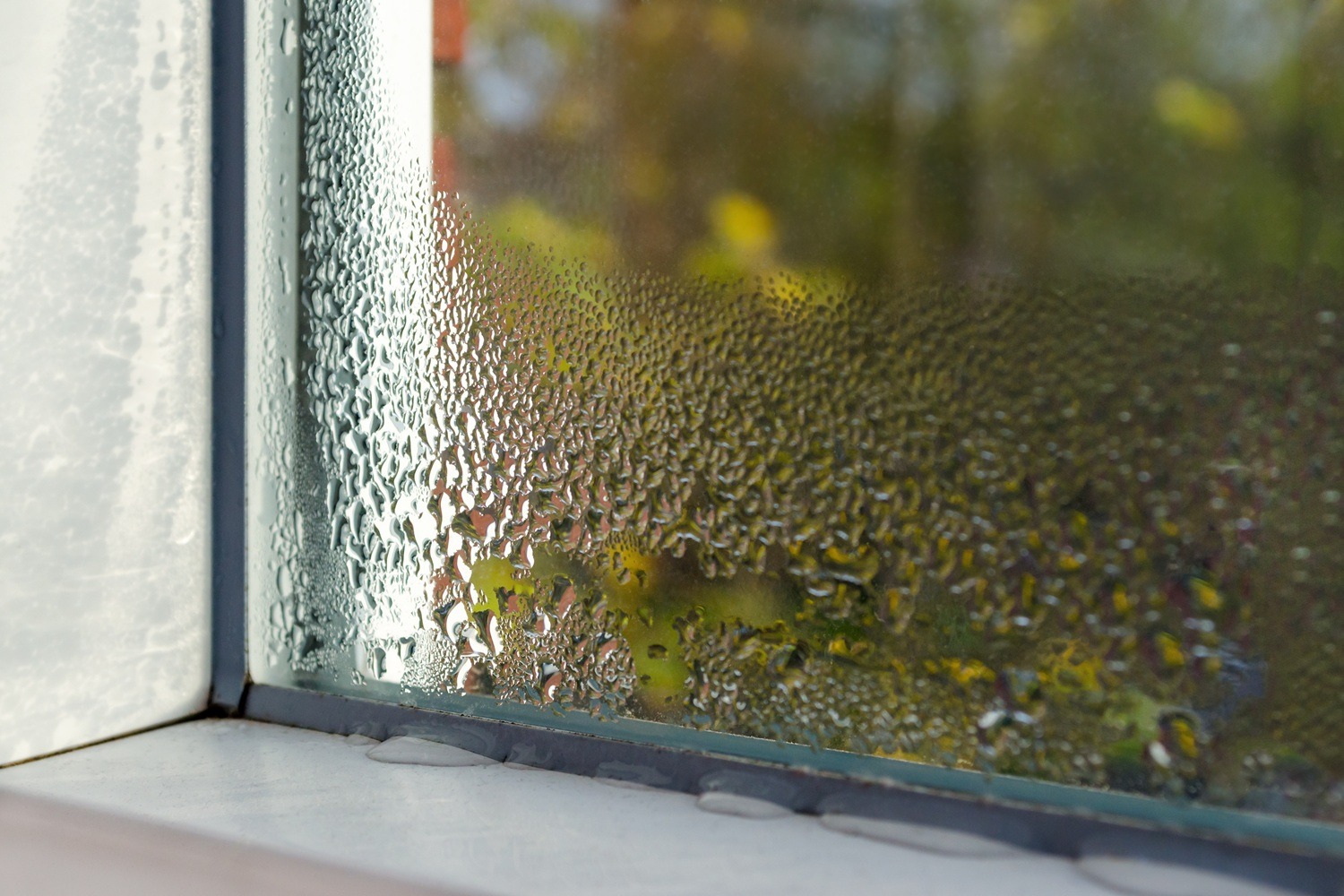
Winter is certainly coming, and the bottoms of your windows can get wet before you even wake up. This kind of condensation on windows is common in places that experience genuine winters, like the DMV, because of the discrepancy between the outside temperature and indoor humidity. Fortunately, that makes this common issue a simple fix that doesn’t require replacing large swaths of glass.
Quick Answer
Condensation on the inside of windows usually means indoor humidity is too high for the outdoor temperature. Aim for less than 40% humidity when it’s 20°F to 40°F outside, dropping toward 30% or lower during colder weather. Fog on the outside is usually harmless, but fog between the panes can indicate a failed seal, and repeated moisture on window sills can lead to wood rot and mold.
Why Condensation on Windows Shows Up in Winter
Warm air can contain more water vapor than cold air. When humid indoor air touches a cold window, it cools below its dew point, leaving droplets on the glass.
This happens more on older single-pane windows because there’s less glass, which means it loses heat more quickly. Insulated double- and triple-pane windows keep their interior surfaces warmer, particularly when they use low-emissivity coatings and insulating gas fills.
That’s one reason energy-efficient windows generally resist interior condensation better than older single-pane models. But they can only do so much, and will develop condensation if there’s enough moisture in the house.
Showers, cooking, laundry, and humidifiers all contribute to indoor humidity. A houseful of holiday guests adds moisture through everyday activities and breathing. With the windows closed and the heat running, that water vapor can accumulate.
How Low Should Indoor Humidity Be in Winter?
The Center for Energy and Environment publishes the following guidance for winter indoor humidity:
| Outdoor temperature | Recommended indoor relative humidity |
| 20°F to 40°F | Below 40% |
| 10°F to 20°F | Below 35% |
| 0°F to 10°F | Below 30% |
| -10°F to 0°F | Below 25% |
| -20°F to -10°F | Below 20% |
| Below -20°F | Below 15% |
Glass temperature, window insulation, indoor temperature, and airflow also affect condensation. For example, if the outdoor temperature drops to 15°F, a household maintaining 40% humidity may start seeing wet windows. Lowering the humidifier setting toward 35% can help, although particularly cold windows may still need a lower level.
A digital hygrometer measures the indoor humidity, and the windows show whether that level is too high. Read the hygrometer in the main living area, then check the glass on the coldest mornings, when condensation is most likely to appear.
Homes with a whole-house humidifier need one more step: turning the humidistat down as outdoor temperatures fall, which belongs on a seasonal home maintenance schedule.
What the Location of the Condensation Tells You
Water on the room-facing glass often appears first in bedrooms and bathrooms. Heavy curtains can trap cold air against the window, and lower corners are usually colder than the rest of the glass.
You can fix this by opening the curtains for better airflow. Always use bathroom exhaust fans during and after showers, and use the kitchen exhaust fan while cooking. Also make sure those fans vent outside and not into the attic.
If a humidifier is running near a wet window, move it farther away or lower its setting. North Dakota State University Extension also recommends adding an extra layer to the window to warm the inside glass, and a storm window or interior plastic film both do that.
Dew on the outside of the glass is a different story. It forms when the exterior pane cools below the outdoor dew point, often during clear, calm mornings.
Newer, well-insulated windows can show more exterior condensation because less indoor heat escapes to warm the outside pane. It’s generally a sign of thermal performance rather than a defect, and the moisture usually disappears as sunlight warms the glass.
How Much Does It Cost to Replace Fogged Window Glass?
You don’t always need to replace the entire window when issues arise. For example, if the seal fails but the sash and frame are still good, a contractor may be able to replace only the insulated glass unit. HomeGuide’s 2026 pricing data puts average window glass replacement at $300 to $650 per window, including installation. That price depends on several factors like glass size, number of panes, coatings, location, and labor.
For comparison, HomeGuide estimates full window replacement at roughly $450 to $1,500 per window on average. Glass-only work is often cheaper, but it isn’t available or advisable for every window design.
Spending money on new glass makes less sense if the frame has wood rot or no longer closes properly. When several windows are fogging at once, that’s the point to price a full window replacement cost estimate instead.
Key Takeaways
- Winter humidity limits change with temperature, from below 40% at 20°F to 40°F down to lower levels in colder weather.
- Exterior dew on well-insulated windows is usually harmless, while fog between panes generally indicates seal failure.
- Replacing a damaged insulated glass unit often costs less than replacing the entire window when the frame is sound.
- Exhaust fans, adjusted humidifier settings, open curtains, and an extra window layer can reduce interior condensation.
- Water collecting repeatedly on a sill deserves attention before it damages the surrounding wood.
Questions About Window Condensation
Is condensation on windows a sign they need replacing?
Not usually. If moisture forms on the room-facing glass and disappears when humidity falls, the window is working normally. Persistent fog between panes or a soft, stained frame is the point to have a family-owned window company check whether the problem stops at the glass.
What humidity level stops window condensation in winter?
Below 40% when it’s 20°F to 40°F outside, and lower as temperatures drop, following the table above. If condensation continues at those levels, check for cold spots, blocked airflow, or poorly insulated glass.
Do defogging services fix a fogged window?
They may temporarily improve visibility, but they generally don’t restore the original factory seal or insulating gas fill. A service that drills or vents the glass can remove visible moisture without correcting the underlying seal failure. Before paying for defogging, compare its warranty against replacing the sealed glass unit, and run the checks in what to look for in a contractor.
What Condensation on Windows Can Leave Behind
Water running down the glass every morning eventually reaches the sill. Over a heating season, North Dakota State University Extension warns, that moisture can rot the surrounding wood and encourage mold.
Inspect any stained or swollen wood around the lower frame. If the paint is peeling or the surface feels unusually soft, a professional should check how far the damage extends. Don’t force a screwdriver into sound wood just to test it.
If that check finds rot in the frame itself, new glass won’t fix it, and the job becomes a choice between full-frame and pocket window installation.
For now, wiping the glass dry each morning and lowering the humidity are inexpensive ways to prevent further damage.
Sources
Center for Energy and Environment, Managing Indoor Humidity Levels, All Year Round
North Dakota State University Extension, Healthy Home Lesson: Home Moisture