
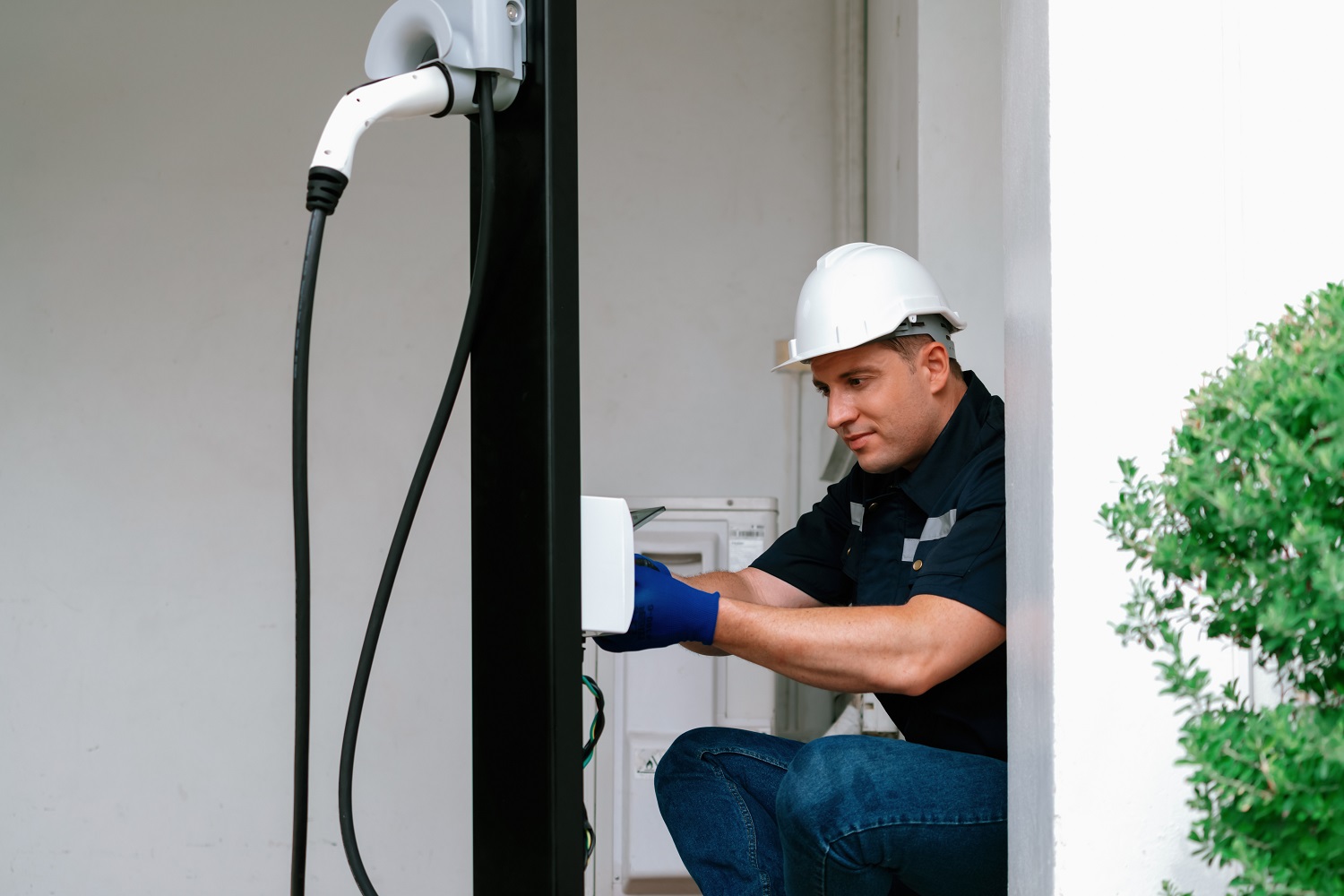
Buying an electric vehicle feels like the big decision. Installing a charger at home feels like an afterthought, something you sort out later. But home EV charger installation has a unique way of forcing itself to the front of your mind. The charger itself is the easy part. The electrical work behind it sets the real cost, the timeline, and how smoothly the job goes.
What to Know Before You Start Home EV Charger Installation
Before anything gets installed, you need to know whether your panel has room for the added load, which charger level fits your driving, and what your town requires for permits. Not knowing any of these will cause the job to take longer and drain a bigger chunk of your wallet.
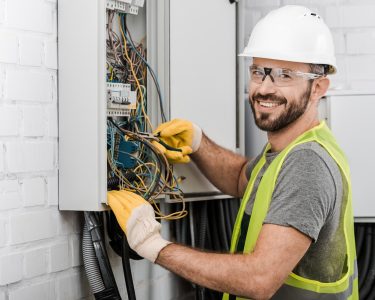
Panel capacity can create one of the biggest surprises during an EV charger installation. Your home was likely built before electric vehicles were even conceptualized. If your home needs a panel upgrade, you need an electrician who specializes in EV charging, not a general contractor. That first visit takes less than an hour, and it tells you whether the rest of the quote is realistic.
How Your Home’s Electrical Panel Affects the Job
Older homes are more likely to have 60- or 100-amp electrical service, which can leave less capacity for a higher-powered Level 2 charger depending on the home’s existing loads. They weren’t built for a full electric vehicle.
A Level 2 charger needs its own 240-volt circuit, and the power behind it has to come from somewhere.
If your panel is already close to full, one more high-draw circuit can trip breakers or overload it slowly over time. That’s also why electrical work usually needs to happen early in any renovation sequence, not squeezed in after the drywall goes up.
Signs Your Electrical System Needs a Closer Look First
Breaker trips, limited capacity, a lack of open breaker slots, and flickering lights under heavy load can all point to panel work before the charger goes in.
- Breakers that trip when you run the dryer and microwave together
- A panel rated at 100 amps or less in a home built before 1990
- No open slots left for a new breaker
- Flickering lights when a large appliance kicks on
If any of these sound familiar, anticipate a panel upgrade before a charger upgrade. Homeowners planning a kitchen remodel already know this. An EV charger installation runs into the same panel questions that come up before any major remodel.
Level 2 vs. Level 1 Chargers: Which One Makes Sense?
Level 1 uses a standard household outlet and adds around three to five miles of range per hour. That works fine if your car sits overnight and doesn’t see much daily driving.
Level 2 needs that dedicated 240-volt circuit but can add about 25 to 40 miles per hour. That’s closer to what most EV owners expect.
If you drive more than 30 miles a day or share one car between two drivers, Level 2 becomes the baseline instead of the nice-to-have upgrade.
Level 1 still works for plug-in hybrids or homes with a second gas car. The lower draw usually means no panel work involved.
Home EV Charger Installation Costs and What Drives Them
The charger hardware itself usually runs $300 to $700 for a quality Level 2 unit. Labor and materials for a basic install land between $800 and $1,600. That’s assuming the panel already has room to spare.
Needing a panel upgrade changes the math here. A new service panel alone can add $1,500 to $3,000.
Distance from the panel affects price too. A charger installed 40 feet away costs less than one installed across the house because the added wire and conduit add labor hours.
Before anyone quotes a final number, a good electrician should run a full load calculation and panel inspection first. Guessing at panel capacity is how homeowners end up with a mid-project change order.
Permits, Inspections, and Code Requirements
Skipping the permit saves a little time upfront but can come back to bite you. Unpermitted work can flag during a home inspection when you sell. Some insurance policies deny claims tied to work no inspector ever signed off on.
The National Electrical Code’s Article 625 sets the baseline rules for EV charging circuits. Where required, the electrician can typically help handle the electrical permit and inspection process.
This step adds a few days to the timeline. It also confirms the charger can run at full power without becoming a fire risk.
Rebates and Tax Credits for Home EV Charger Installation
The federal Section 30C tax credit used to cover 30% of hardware and installation costs, but it expired for residential charging property placed in service after June 30, 2026. Even before that, it only applied to specific low-income or non-urban census tracts.
State and utility programs are the more realistic savings now. Some utilities offer a flat rebate for adding a Level 2 charger. Others offer lower electricity rates for off-peak charging instead.
Before filing anything yourself, an electrician familiar with EV work can point you toward rebates through utility and state programs. Financing options exist too, for homeowners who would rather spread the cost over a few months.
Hiring an Electrician for Home EV Charger Installation
Not every licensed electrician handles enough home EV charger installation jobs to know what each charger brand requires.
Look for someone who runs load calculations as a standard part of the job before wiring starts. A certification for the specific brand of charger you’re choosing is a good sign too. The same red flags that show up when vetting any contractor also apply here.
Ask how many installs they’ve done in the past year. Somewhere in the dozens usually beats the single digits.
Questions to Ask Before You Sign
- Does the quote include a load calculation, or is that billed separately later?
- Who pulls the permit, the homeowner or the electrician?
- What happens to the price if the panel needs an upgrade mid-job?
- Which charger brands have they installed most recently?
A specialist should be able to answer all four clearly.
What Changes If You Live in a Condo or Townhome
Homeowners in condos or townhomes without extra panel capacity still have options even when they can’t upgrade a shared electrical service.
An electrician may be able to install a load-management or circuit-sharing system that adjusts EV charging based on the home’s available electrical capacity.
It works by pausing or slowing the charger when other high-draw appliances run, then picking back up once demand drops. This costs less than a full panel replacement.
It often clears HOA or landlord concerns too, since nothing about the home’s existing service changes.
Questions Homeowners Ask
Can I install a home EV charger myself?
Running the wiring and connecting it to your panel needs a licensed electrician in nearly every jurisdiction. That’s true both for safety and because unpermitted work causes problems later.
Mounting the charger unit itself, once the circuit is in place, is sometimes homeowner-friendly. Check local code before doing any part of the work yourself.
How long does installation take?
A basic install with no panel upgrade needed usually takes half a day to a full day. Add a panel upgrade, and the timeline stretches to two or three days.
That’s on top of whatever time your town needs to schedule the permit inspection.
Do I need a separate meter for my EV charger?
Not usually. Most installations run off the home’s main panel and existing meter.
A separate meter only comes up with specific utility programs that offer a discounted EV rate. Your electrician can confirm if one applies where you live.
Before You Book the Install
Start with the load calculation, ask about permits before signing anything, and check which state or utility rebates apply in your area now that the federal credit has expired.
The one call worth making before you shop for a charger is to an electrician, not a retailer. They’re the one who can tell you whether your panel is ready.
Sources
U.S. EPA, Getting Started with Home EV Charging
U.S. Department of Energy, Tax Credits for Electric Vehicles and Charging Infrastructure