

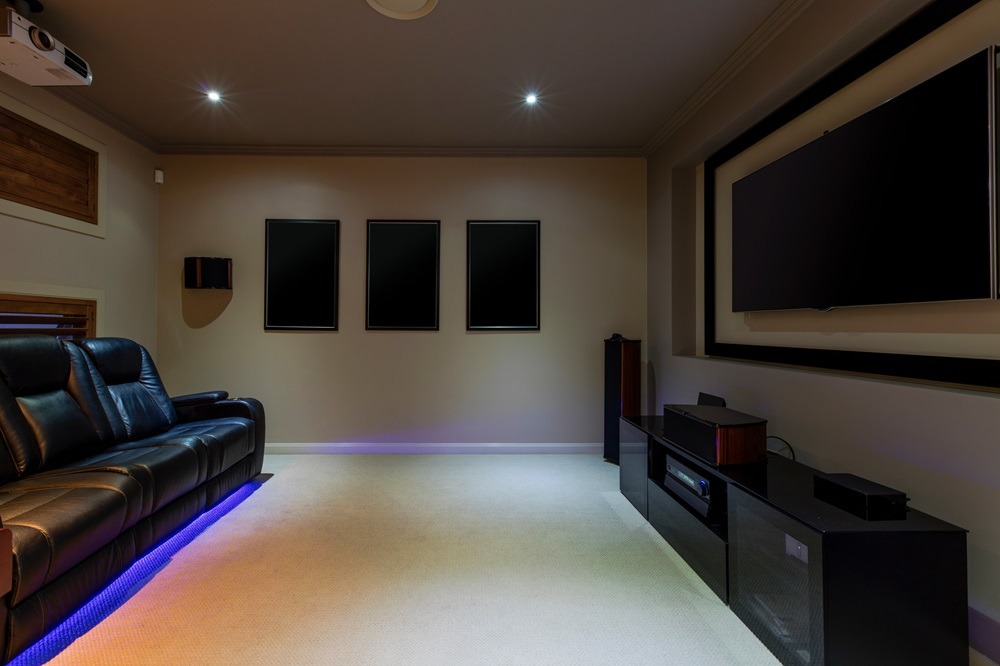
That perfect color that speaks to you on a spiritual level under the store lighting can read very differently once you get home. Choosing paint colors for low light rooms, in particular, gets incredibly challenging due to the numerous ways light interacts with the room. How much light does the room get? Where does that light come from? All these questions have a serious impact on how your paint will look once it’s on the walls.
What Changes Paint Colors for Low Light Rooms
Paint doesn’t have its own color. It reflects whatever light hits it. So a room with less natural light gives a color less to work with. The shade reads darker and flatter than it would in a bright room.
As a result, you can’t always default to your favorite color when picking out paint colors for low light rooms. The color you choose has to hold up under conditions a swatch card can’t show you.
Why Paint Colors for Low Light Rooms Look Different by Direction
The direction a room’s windows face changes the color of the light itself. It’s not just about how much light there is. That’s a separate problem from brightness, and it catches a lot of homeowners off guard.
North, South, East, and West, Explained Simply
North-facing rooms get soft, cool, indirect light all day. Colors can look flatter and slightly blue here. South-facing rooms tend to get consistent, warm natural light throughout the day, which makes many colors easier to work with.
East-facing rooms get warm morning light that gets progressively cooler as the day goes on. West-facing rooms do the opposite: cooler in the morning, warm and golden by evening. A color that looks great at 9am in an east-facing room can look different by 4pm.
Testing a Color Before You Commit to a Wall
A 2-inch swatch gives you a vague idea of how the color looks, but it can’t replicate an actual wall. To test how the paint will look on an actual wall, paint a sample directly on the wall instead, in more than one spot.
Check it in the morning, midday, and evening before deciding. You’ll be surprised by how much the color can shift throughout the day.
What Light Reflectance Value Actually Tells You
Light Reflectance Value, is a number from 0 to 100 that tells you how much light a color bounces back into the room. You can usually find a color’s LRV in the manufacturer’s color information, whether on a sample, fan deck, or website.
Sherwin-Williams uses the 0-to-100 scale on its own color tools. Higher-LRV colors reflect more available light, while lower-LRV colors absorb more of it and generally appear darker. It recommends higher-LRV colors specifically for north-facing rooms, since that light needs the extra help.
Choosing Paint Colors for Low Light Rooms That Still Feel Warm
The first thing most people do in a dark room is to go as light and white as possible. It’s a good idea in theory, but not necessarily in practice.
A stark white with no warmth can look cold and gray in low light. There isn’t enough light hitting it to bring out any brightness. Warmer off-whites, soft creams, and pale golds make better paint colors for low light rooms, because they tend to hold their character better in those low light situations.
Finishes That Help (and the One That Hurts)
Finish affects how light reflects from the wall, so it can change the way the color reads. Eggshell and satin finishes reflect more light than flat paint, without the glare of a full gloss.
Flat paint has very little sheen, so it produces less reflected shine than eggshell or satin. Eggshell and satin can return more directional light to the room, although the color’s LRV still matters. Save flat for ceilings and ask about eggshell or satin for the walls themselves.
What Changes Once the Sun Goes Down
So, what happens to the colors you pick after the sun goes down? The artificial light from your lightbulbs puts them through another test. How a color reads at night comes down to bulb color temperature, much like the differences between LED and traditional bulbs.
A warm-toned bulb flatters warm paint colors. A cooler, bluer bulb can wash the warmth right back out of the wall. Kitchens usually handle this better because they already lean on layered lighting instead of one fixture that does all the work.
When Some Paint Colors for Low Light Rooms Just Won’t Work
Some rooms are dark enough that no color choice fully solves it. A basement with one small window needs a different decision than a room that just faces north. So does an interior room with no windows at all.
In those cases, homeowners are better off calling in a color consultant or knowledgeable interior painter to see the room in person than trusting a swatch or a photo. Actual light in the actual room is the only reliable test.
That kind of judgment call is easier for someone who’s tested a color in dozens of rooms with a similar light problem than it is from a single swatch card. That experience is hard to replace with an online color-matching tool.
A second opinion catches problems early, before they’re on every wall, especially from a painter who’s worked across enough homes to have seen this exact color shift before. Whether a professional gets involved or not, homeowners get the most reliable read by painting a large sample directly on the wall instead of trusting a small swatch.
Questions Homeowners Ask
Does the paint brand or type change how it handles low light?
Not much. The color and finish drive the outcome far more than the brand does. But brand and product line can still matter. LRV and sheen help predict how a paint will interact with light, but two colors with the same LRV are not necessarily identical, especially when their undertones or formulations differ.
Should I paint the ceiling the same color as the walls?
A lighter ceiling can help reflect more available light, but matching the ceiling to the walls can still work depending on the color, LRV, lighting, and effect you want.
How many samples should I test before choosing?
Two or three real contenders, painted big enough to judge, is usually plenty. Testing more than that tends to just add confusion without adding clarity.
Getting Paint Colors Right for Low Light Rooms the First Time
A north-facing room and a south-facing room can need completely different answers even when you’re considering a single color.
Test the color on the actual wall and check it at more than one time of day. Treat the LRV number as real information rather than a footnote.
Once the color itself is settled, use the usual vetting you’d apply to any painter before signing off.
Sources
Sherwin-Williams, How to Choose Paint Colors Based on Room Direction