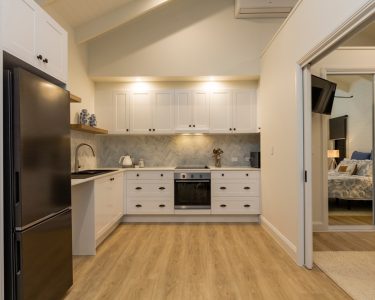


A floor that feels steady in a showroom may catch a walker at home. Families planning for an older parent also have to check the material below the finish and every doorway along the route. When someone uses a walker or wheelchair, slip-resistant flooring needs grip under wet feet and a firm path through each doorway. A raised reducer at the bathroom door can catch a small caster between two secure floors.
Before collecting samples, a family can trace the path from bed to bathroom and on to the main exit. Notes along the route should show where water collects and where wheels turn. Home testing needs the walker or wheelchair and the shoes worn indoors.
Quick Answer
A household should choose a firm floor without a glossy finish and check the maker’s instructions for the planned room. Textured vinyl, dense low-pile carpet, or sealed cork may suit a dry room after a mobility-aid test. A caregiver may notice a walker catching at one doorway during several senior care visits. For a wet room, the product needs a wet-use declaration, and the sample test needs the planned underlayment and reducer.
Slip-Resistant Flooring Must Work With Feet and Wheels
Padding and underlayment affect how a walker or wheelchair moves. A soft pad lets a walker tip sink or makes a front caster hesitate during a turn. Family members should mark each snag on a flooring plan before approving a product.
A wet threshold can become harder to see under a dim hallway light. Data from the Centers for Disease Control and Prevention show that one in four people age 65 and older reports a fall each year. Among adults who fall, about 37 percent report an injury that needs medical treatment or restricts activity for at least a day. A home test should use the lighting and footwear present along the route.
Underlayment can raise a thin finish above the next room. A designer can add finished floor height to an aging-in-place plan that already shows lighting and clear travel width. Installers should record the finish, underlayment, and reducer together before ordering materials.
Bedroom and Living Room Floors: Test the Turn
Beside a bed, a walker may turn in less space than it uses in a hallway. Textured luxury vinyl can stay flat under wheels over a firm base. A low-gloss finish may reduce glare near a window. Warranty terms should permit the cleaner used at home.
Sealed cork feels warmer underfoot than tile and may work where standing water is unlikely. Furniture pads protect the finish, and spills need prompt cleanup. Low-pile carpet needs a dense pad because a soft pad can stop a small caster during a 90-degree turn.
Residential rubber may suit a laundry or exercise area. Rubber thickness affects door clearance. A six-inch square cannot show how a caster behaves at a seam, so a household needs a larger sample. Before ordering, buyers should ask whether a crew can replace one damaged tile without lifting the surrounding floor.
Slip-Resistant Flooring in Bathrooms and Kitchens
Bathroom testing should include soap residue and tracked water. According to the Tile Council of North America, a DCOF number does not predict whether a person will slip. The council’s overview lists “Interior, Wet” and “Interior, Wet Plus” among the product-use classes. Buyers should request the maker-declared class and keep the product sheet with the contract.
Matte porcelain tile may work when the maker lists wet interior use. Mosaic tile adds grout joints, and buyers should inspect the texture between them. Sheet safety vinyl reduces seams. Some residential rubber feels softer underfoot and needs a compatible subfloor and adhesive.
A caregiver may keep both feet planted beside the shower for several minutes while providing personal care services. Family members should mark where the caregiver stands and where the person leaving the shower places the first foot. Loose mats inside the marked areas may move as both people step or turn.
Doorway Height Can Stop a Front Caster
A small height change at a doorway may stop a front caster or catch a walker tip. Where adjacent subfloors allow a level connection, a flush join removes the raised edge. If the doorway needs a reducer, a family member can press the reducer edge and roll the walker across from several approach angles.
A caregiver joining walks through the home during companion care may see a front caster stop at one doorway. Painter’s tape can mark the approach where the wheel stalls. An installer can then check reducer height and glare from the marked approach.
From standing and seated height, a family member should view the reducer. Dark strips may look like drops from a wheelchair. Busy patterns may hide water near the join.
Stairs need a firm covering and a visible tread edge. Someone in the household should check each tread from above and below under the light used at night. Loose runners and thick nosing can catch a toe or cane.
Small Repairs for Loose Edges and Raised Boards
A crew can fasten a loose carpet edge, reset a raised board, or replace cracked tile in one area. Household members should move unsecured rugs away from the main route while the crew prices the work. After the repair, the walker or wheelchair should cross the area again before furniture goes back.
Some wood floors may take a matte or satin recoat. In a wet room, an installer should use only a coating that suits the existing floor and has a wet-use declaration. Any repair that raises part of the floor needs another reducer check.
After a near-slip, a family member should write down the room and footwear. Each entry should state whether the floor was wet and whether the person was turning or leaving the shower. An installer can use the log to trace the problem to a wet spot, loose edge, or tight turn.
Adhesive-backed traction strips can add grip on a short dry route when the maker approves the floor beneath. A household member should check every edge after cleaning because a lifted corner can catch a sock or walker tip. In a wet area, the strip should stay outside the drain path and have a wet-use declaration.
Questions to Answer Before Ordering Flooring
Which slip-resistant flooring works best for aging in place?
Textured sheet vinyl or luxury vinyl can work across many dry rooms. Bathrooms need a product whose maker lists wet interior use. Contracts should list the product code, use class, and planned reducer before work begins.
Can luxury vinyl work with a walker or wheelchair?
Yes, if the installed floor stays flat and the underlayment remains firm during a turn. Households should confirm warranty coverage for wheeled traffic, then test a front caster across a plank joint and the planned reducer.
Should floor colors stay the same between rooms?
Floor colors can change when the join remains visible under the lighting used at night. A family member should photograph the join from standing and seated height. The seated photo may reveal a reducer that looks like a drop. A lower profile or a new color can correct the visual problem before ordering.
Test Slip-Resistant Flooring With the Walker Before Ordering
Before ordering slip-resistant flooring, a family should place a full-size sample beside the current floor with the planned reducer. A family member can roll the household’s walker or wheelchair across the join, then repeat through a turn in indoor shoes. After a recent fall or major mobility change, a family may ask a physical or occupational therapist to join the route test. Household members should attach the approved product code and reducer profile to the contract before signing.
Sources
Centers for Disease Control and Prevention, Older Adult Falls Data
Tile Council of North America, Dynamic Coefficient of Friction Frequently Asked Questions