
Homeowners pay $200 for a plumber to inspect their homes. That plumber finds a slow leak and charges another $200 to fix it right then. The leak was caught and resolved early, so it is not a deeper issue. But if that same leak was not found for months or even years, it could rot subfloors or wall framing, and the repairs could cost thousands more. That is the power of consistent maintenance, the foundation of most home improvement projects that return the most at resale.
Quick Answer
A home maintenance schedule is a calendar-driven system for inspecting and servicing your home’s systems before problems develop. Monthly tasks cover filters and safety devices. Seasonal tasks cover exterior, HVAC, and drainage. Annual tasks include professional inspections of chimneys, plumbing, and electrical. Homes on a consistent schedule cost less to own over time than those managed reactively.
Why a Home Maintenance Schedule Is a Financial Strategy, Not a To-Do List
Homes deteriorate without active intervention. Systems and materials degrade, turning small problems into larger, more expensive ones. Keeping a consistent maintenance schedule provides a system to interrupt that process.
Think of this as a financial strategy that attaches costs to skipping maintenance tasks. When a financial strategy’s tasks are skipped, they incur a cost that is usually higher than the task itself. The compounding financial case for keeping up with routine home maintenance applies to every home regardless of age or value.
What Deferred Maintenance Actually Costs
According to a Congressional Research Service analysis, emergency repairs resulting from deferred maintenance can cost three to ten times more than the preventive maintenance that would have prevented them. That means a clogged gutter that would have cost $150 to repair could cause water infiltration damage costing $450 to $1,500 to remediate.
The Difference Between Reactive and Preventive Home Care
Most homeowners reactively call a contractor when something breaks. Preventive homeowners schedule inspections before anything breaks. Emergency repairs cost much more than scheduled work, and by the time a homeowner sees damage, it has usually spread. Additionally, if no one is monitoring the systems’ condition, they tend to fail one after the other.
Building a Home Maintenance Schedule: The Annual Framework
A well-built schedule assigns tasks to different frequencies. Monthly tasks take 15 minutes. Seasonal tasks take a day. Annual professional inspections take an afternoon. Treating maintenance as a single list is a mistake. A single list has no tiered system with dates, assigned responsibility, or records of what was done and when. That documentation is especially important for reselling the home; buyers’ inspectors will notice that the home has been cared for.
Spring and Summer: Exterior, Systems, and Cooling
Inspect the roof for winter damage, clear gutters and downspouts, check caulking around windows and doors, and look for peeling exterior paint. Schedule AC service before first use of the season and replace HVAC filters. Clean the dryer exhaust vent. Clogged dryer vents are a leading contributor to residential fires every year, according to the CPSC. The irony is that it is an incredibly simple task that is skipped incredibly often.
Home improvement projects worth completing before winter are better planned in spring. There is time to schedule trades so homeowners are not scrambling before it gets brutally cold.
Fall and Winter: Heating, Safety, and Weatherproofing
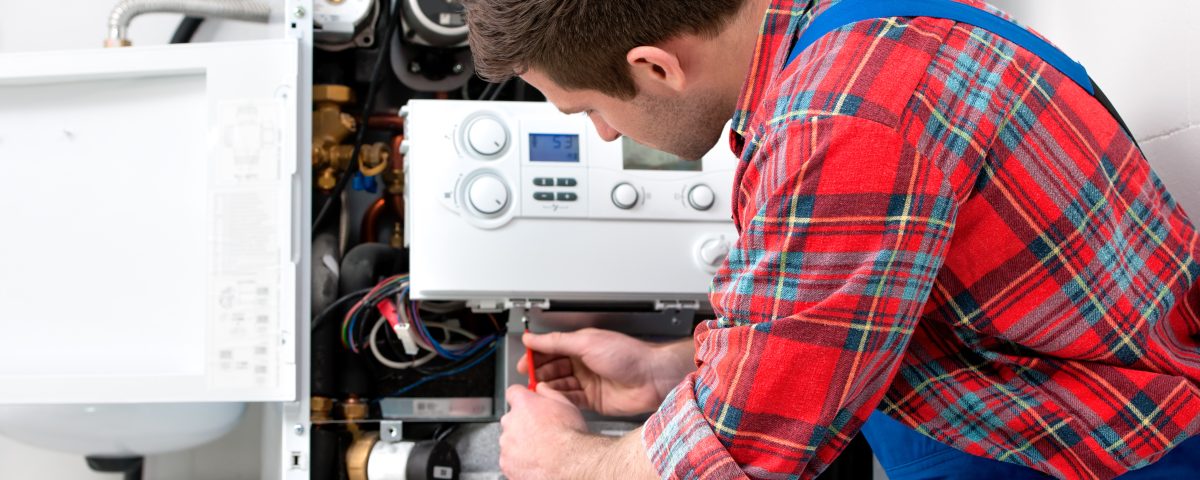
Schedule annual furnace or boiler service before the first use. The CPSC urges annual inspection of all fuel-burning appliances, noting that CO poisoning from neglected heating equipment is especially dangerous. Replace HVAC filters again.
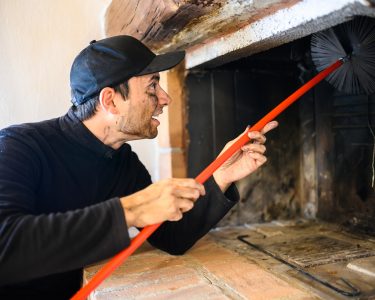
Schedule a chimney sweep and inspection before fireplace season. How often a chimney inspection should be scheduled depends on use frequency, but once a year is a good rule of thumb.
Test every smoke and CO detector, check fire extinguisher pressure, clear gutters of fall leaves before the first freeze, and inspect door and window seals.
The Complete Checklist
Monthly
- Replace or check HVAC filters
- Test smoke and CO detectors
- Check fire extinguisher pressure gauge
- Inspect under sinks for drips or moisture
- Check visible plumbing connections in bathrooms and laundry
Spring
- Inspect roof for winter damage: missing shingles, damaged flashing
- Clear gutters and downspouts
- Reapply or repair caulking around windows, doors, and exterior penetrations
- Check exterior paint for peeling or cracking
- Schedule AC service before first use
- Clean dryer exhaust vent
- Check outdoor spigots and irrigation systems after winter dormancy
- Test sump pump
- Inspect driveway and walkways for cracks
- Check attic for moisture damage or compromised insulation
Summer
- Inspect deck or patio for loose fasteners or soft wood
- Trim trees and shrubs back from the roofline and exterior walls
- Flush water heater to clear sediment buildup
- Check window screens for tears or loose frames
- Inspect basement or crawl space for moisture
Fall
- Schedule furnace or boiler service before the first use
- Replace HVAC filters
- Schedule chimney sweep and inspection
- Clear gutters of leaf accumulation before the first freeze
- Inspect and replace weatherstripping on exterior doors
- Check attic insulation condition and coverage
- Winterize irrigation system
- Inspect exterior for gaps or cracks that could allow water intrusion over winter
Winter
- Check pipes in unheated spaces during cold snaps
- Check for ice dam formation after heavy snowfall
- Keep garage temperatures above freezing if plumbing runs through it
- Check basement walls for moisture or seepage after freeze-thaw cycles
Annual Professional Inspections
- Chimney sweep and inspection
- HVAC service: heating system in fall, cooling system in spring
- Plumbing inspection: supply lines, valves, water heater
- Electrical panel assessment
- Roof inspection by a licensed roofer
- Pest inspection in climates where termite or rodent activity is a risk
The Tasks Most Homeowners Skip
Many categories, such as plumbing, electrical, and drainage, do not show visible warning signs until the damage reaches a breaking point, and they usually produce the most expensive reactive repairs.
Plumbing and Electrical: The Checks That Prevent the Biggest Bills
The most expensive home repairs almost always involve water. Supply line failures, slow leaks behind walls, and water heater neglect will not announce themselves until there is already significant damage. An annual inspection by licensed residential plumbers covers supply line condition, drain health, water heater flushing, and valve operation. These are the conditions that produce $10,000 claims rather than $300 repairs.
Finding a trustworthy residential plumber before you need an emergency repair is worth doing while the stakes are low rather than at two in the morning with a failed supply line.
None of this should be handled as DIY work, but electrical is the most dangerous category to self-assess. An untrained person cannot detect overloaded panels, breaker issues, or outlets with heat discoloration. Residential electricians who perform safety inspections as part of a maintenance program identify the conditions that precede electrical fires rather than responding after them.
What a Home Maintenance Schedule Looks Like When Managed Professionally
For homeowners with complex properties, multiple residences, or demanding schedules, managing all this can feel like a full-time job. A professional home management company handles that job as a single point of contact, assigning a dedicated project manager who knows the property’s systems and coordinates all trades on the owner’s behalf.
Home management programs that handle scheduling, preventive maintenance, and on-call repairs under one roof give homeowners a documented service record, proactive scheduling, and a single call for anything that comes up. The distinction from a handyman service is that coverage is continuous and comprehensive rather than task-by-task.
Frequently Asked Questions
How do I know if my home has a deferred maintenance backlog?
Repeated service calls on the same system, equipment running past its average lifespan, visible deterioration like peeling paint or soft flooring near water sources, and any major system that has never been professionally serviced are the clearest signs. A deferred maintenance backlog almost always costs more to address all at once than it would have cost to maintain on a consistent schedule.
What maintenance tasks are most commonly skipped?
Dryer vent cleaning, water heater flushing, chimney inspection, plumbing valve testing, and electrical panel assessment are the five most consistently deferred, and the five most likely to produce expensive reactive repairs.
What happens when home maintenance is consistently deferred?
Systems deteriorate faster, repair costs accumulate, and the home degrades faster than comparable properties. Congressional Research Service analysis found emergency repairs from deferred maintenance cost three to ten times more than the preventive maintenance that would have prevented them.
What does a home management company do?
A home management company handles a property’s full maintenance scope through a single contact, covering scheduled preventive maintenance, trade coordination, on-call repair response, and service record-keeping for owners of luxury or multiple-residence properties.
The Schedule Is the Investment
The tasks that prevent the most expensive repairs are almost always the affordable ones: an annual inspection, a seasonal check, a filter changed on schedule. The homes with the fewest surprises at sale are usually the ones that have been on a documented maintenance schedule for years.
Sources
Guide to Routine Home Maintenance — National Association of Home Builders
Deferred Maintenance and Repair at Civilian Agencies — Congressional Research Service
Clothes Dryers: Fire Safety — U.S. Consumer Product Safety Commission
CPSC Urges Annual Fuel-Burning Appliance Inspection — U.S. Consumer Product Safety Commission