
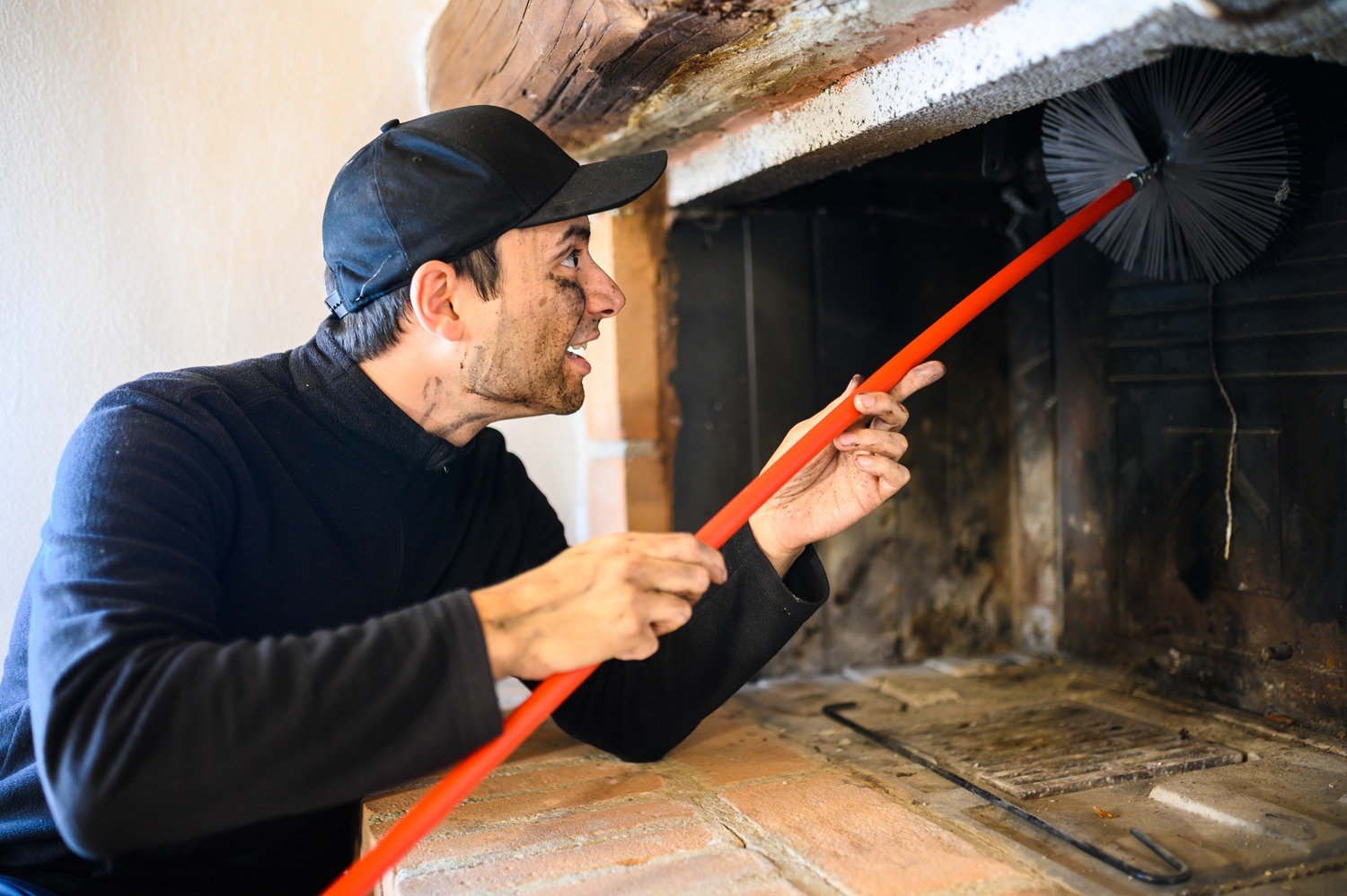
A chimney liner is the inner channel running through the flue that contains combustion heat, directs gases out of the home, and protects the surrounding masonry and framing from the temperatures a fireplace generates. Without one, or with one that’s not in working condition, your house can, quite literally, go up in flames. Heat can transfer to flammable surrounding materials, combustion gases can get into your living space, and you won’t know about either until the fire starts.
It’s hard to gauge liner conditions outside of a chimney inspection, which is typically the first step before scheduling any relining work. Contractors offering chimney liner installation can assess whether an existing liner is still serviceable or whether it needs relining before the next heating season.
What a Chimney Liner Does
Heat Containment and Fire Safety
The main purpose of a liner is isolating heat and keeping it within the flue. Inside the flue, temperatures can exceed 1,000 degrees Fahrenheit during a fire. Without a liner, that heat transfers directly to surrounding masonry and to any combustible framing near the chimney chase. Wood framing can still ignite, even if it’s not in direct contact with the chimney. Over time, sustained heat transfer can raise temperatures beyond the ignition threshold, even if there are several inches of masonry between them.
The National Fire Protection Association (NFPA) publishes the current national consensus standard for chimneys. Its 2027 guidance requires lined flues for every appliance that burns fuel. Most homes built after the 1940s have clay tile liners installed as original construction, designed for wood-burning use with sizing based on the fireplace or appliance they served. When those appliances are updated, the original liner is usually the wrong size for the new appliance.
Combustion Gas, Draft, and Carbon Monoxide
A liner also contains combustion gases. Wood, gas, and oil combustion all produce byproducts: carbon monoxide, carbon dioxide, water vapor, and in wood combustion, creosote. A properly functioning liner channels those byproducts up and out of the flue. A cracked or deteriorated liner allows gases to migrate through gaps into the chimney structure, where they can potentially escape into the living space.
Liner diameter also affects draft. A flue too large for the appliance it serves allows combustion gases to cool before they exit, causing condensation, creosote buildup, and poor draw. A flue too small restricts airflow and can push gases back into the firebox.
If the liner fails, it won’t come out and say, “Hey, I need some repairs.” The typical way to catch these failures before they explode is via a chimney inspection and liner assessment. That kind of systematic check fits naturally into a broader home maintenance schedule, especially in homes that use the fireplace regularly.
Types of Chimney Liner
Clay Tile, Metal, and Cast-in-Place
Clay tile is the standard liner material in most masonry chimneys built before 1990. Under ideal conditions, including infrequent use, no thermal shock, and no seismic movement, clay tile liners can last 50 years or more. In practice, a single intense chimney fire can crack many tiles. In earthquake-prone regions, seismic movement stresses mortar joints between tiles and creates gaps. Once it cracks, it’s very difficult to repair clay tiles. Individual tiles can be replaced sometimes, but if too many are cracked, the chimney might need full relining.
That relining is usually done with stainless steel. It’s flexible enough to get around offsets and bends. Rigid liner requires a straighter flue run but offers a smoother interior surface. Grade 316L stainless is required for oil-burning appliances due to the higher acidity of oil combustion byproducts. Aluminum liner is a lower-cost option rated only for gas appliances, not for wood or oil combustion. Cast-in-place liner is a poured ceramic product that restores structural integrity to severely deteriorated chimneys. It is more invasive and more expensive than stainless steel, but it addresses situations where the masonry itself is compromised. A chimney flue inspection will identify which liner type is present, its condition, and whether the flue geometry and sizing match the appliance it serves.
Which Type Is Right for Which Appliance?
Wood-burning fireplaces and stoves can use clay tile if the original liner is still in good condition. When they need relining, they usually take stainless steel flexible liner because it accommodates the offsets typical in older masonry construction. Gas inserts almost always require relining because the original liner is too big for the gas appliance’s lower BTU output. Aluminum can work for some gas applications, but stainless steel lasts longer. Oil-burning appliances require 316L stainless steel. The sulfuric acid content of oil combustion byproducts corrodes lower grades and voids most warranties.
Signs Your Chimney Liner Needs Replacing
What a Damaged Liner Looks Like
Tile fragments at the firebox base are the most obvious physical sign of liner damage. When clay tile cracks, pieces fall into the firebox. White staining on the chimney exterior, called efflorescence, indicates moisture migrating through cracks in the liner or masonry. Water travels through the gap and carries dissolved minerals to the surface, where they leave behind white residue as the water evaporates.
Smoke entering the room during normal fireplace use suggests a draft problem. The cause may be a sizing issue, a blockage, or structural failure in the liner. Unexplained CO detector alerts should also prompt a chimney inspection. CO migration from a compromised liner is more common than you might think.
When Repair Is an Option vs. Full Replacement
Isolated cracks in individual clay tiles, where surrounding tiles and mortar joints are intact, may be addressable through resurfacing products like HeatShield. HeatShield is a spray-applied ceramic compound that seals minor cracks and smooths the liner interior. But this is only applicable when damage is limited. Don’t try this before confirming the extent of damage is within the range resurfacing can address.
Widespread cracking, spalling, or missing tile sections require full relining. So does any conversion from one fuel type to another. Even a liner in excellent condition for wood burning is not appropriately sized or rated for a gas appliance. Any reputable chimney repair contractor should give the homeowner documentation of the liner’s actual condition and a basis for comparison.
Chimney Liner Cost and What Affects It
Cost by Liner Type
Stainless steel flexible liner installation typically runs $625 to $7,000 depending on flue length, diameter, liner grade, and whether a cap and connector are included. That’s a humongous range because flue length varies significantly between a single-story ranch and a three-story home with the fireplace at ground level.
What Else Gets Priced Into a Relining Job
Isolated liner replacements are pretty rare. Cap replacement is more common because a deteriorated or missing cap allows water into the flue and accelerates liner degradation. Smoke chamber repair may be needed if the parging has deteriorated, redirecting heat toward surrounding masonry rather than up the flue. A sweep before the liner installation removes creosote that would interfere with installation. A draft test after installation confirms the system is drawing correctly. The full scope of fireplace and chimney services, including inspection, relining, cap installation, and sweep, is often bundled when a liner replacement is scheduled, which can reduce total cost relative to scheduling each service separately.
Frequently Asked Questions
How long does a chimney liner last?
Clay tile liners in well-maintained chimneys can last 50 years under normal conditions, though a single chimney fire or significant seismic event can shorten that considerably. Stainless steel liners carry manufacturer warranties of 15 to 25 years depending on grade and application. Cast-in-place liners are designed to last the life of the chimney.
Is a chimney liner required by code?
Yes. NFPA 211 requires lined flues for all fuel-burning appliances. Most local building codes adopt NFPA 211 or equivalent standards. An unlined or damaged-liner chimney is a code violation and a fire hazard.
Can I use my fireplace without a liner?
Not safely, and in most jurisdictions not legally. The risks are fire from heat transfer to combustible framing and CO migration into the living space from combustion gas leakage through the unlined flue.
How do I know if my chimney liner is damaged?
Most liner damage is not visible without a camera inspection. Symptoms that warrant a professional inspection include tile fragments at the firebox base, white staining on the chimney exterior, smoke entering the room during normal use, and unexplained CO detector alerts.
Does homeowners’ insurance cover chimney liner replacement?
It depends on the cause and the policy. Liner damage from a sudden event, such as a chimney fire or lightning strike, may be covered under dwelling coverage. Deterioration from normal aging is typically excluded as a maintenance issue. Confirm with your insurer before assuming coverage applies.
What is the difference between relining and repointing?
Relining replaces or restores the interior liner of the flue. Repointing addresses the exterior mortar joints between the chimney’s masonry units.
Before the Next Heating Season
A chimney liner cracks silently, loses integrity gradually, and allows heat and gases to migrate into places they should not reach before any visible symptom appears at the fireplace opening. The only reliable way to know a liner’s condition is a camera inspection by a credentialed professional.
The question to ask before any relining work is scheduled: what did the inspection show, specifically? A contractor who recommends relining without camera documentation is just assuming. One who shows the homeowner the inspection footage, identifies the damage type and location, and explains why repair is or is not viable is doing the job correctly. That documentation also matters for insurance claims and for any future sale of the home.
Sources
- CSIA, Homeowner Resources — https://www.csia.org/homeowner-resources
- National Chimney Authority, NFPA 211 chimney liner standard explained — https://nationalchimneyauthority.com/nfpa-211-chimney-standard
- Angi, chimney liner cost by type and installation — https://www.angi.com/articles/how-much-does-it-cost-install-chimney-liner.htm