
The clock’s ticking on your flight to the Bahamas, and you’re already running late. But when you hit the garage door button as you back out of your driveway, it won’t close. It starts to, then suddenly stops and reverses back up. The door itself is most likely fine. Usually, a garage door safety sensor not working the way it should is the culprit, and it’s often an easy fix you can do yourself.
Why the Door Reverses Instead of Closing
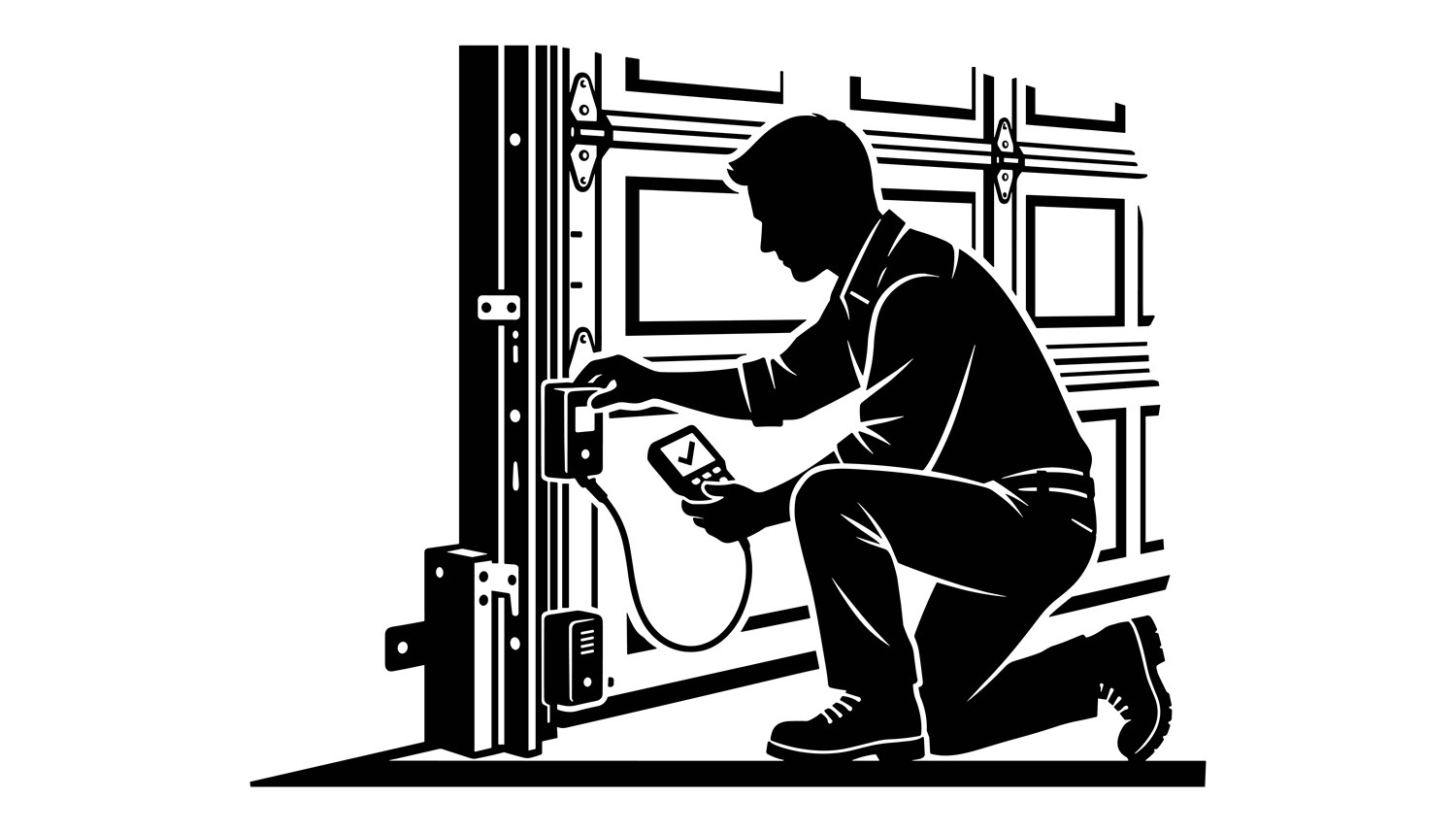
At the bottom of each track, there are two sensors sitting a few inches above the floor. They face each other and send that Mission Impossible-style infrared beam between them. If something interrupts that beam, the door won’t close because it sees something in the way. The door will reverse instead of closing, and that’s an intentional safety feature.
Most openers report the problem with a blinking light instead of failing silently. On LiftMaster and Chamberlain units, ten blinks usually points to a sensor issue. Champions Garage Door Repair’s troubleshooting guide confirms this is one of the most common codes homeowners see.
Garage door sensors have been a standard safety feature since the 1990s, according to Quality Overhead Door. They remain one of the most common points of failure in any opener system.
Garage Door Safety Sensor Not Working? Start Here
Always check these sensors first. Buildup of debris like dust, cobwebs, and pollen is a common culprit. Wipe the lenses with a soft, dry cloth to clear said debris. Don’t use glass cleaner or anything abrasive, since scratching the lens creates a permanent blind spot.
Dirt, Sunlight, and Misalignment: The Easy Fixes
Direct sunlight hitting one sensor can wash out the beam in late afternoon, especially on doors that face west. If the problem only happens at certain times of day, this is usually the cause.
Misalignment is the second most common issue. A bumped ladder, a stray basketball, or years of vibration can knock one sensor a few degrees off center. Garage door repair techniciansGarage door repair technicians see this constantly in older Rockville homes. Original hardware there has had decades to shift.
Check that both LED indicator lights on the sensors are solid, not blinking or off. A solid light on both sides usually means alignment is fine and the problem is elsewhere.
It Might Be the Wiring, Not the Sensor
Sometimes the sensors themselves are fine, but the wiring between them and the opener is on the fritz.
Check the wire runs for anything chewed, frayed, or pinched. Rodents and lawn equipment are the two most common culprits in a garage.
A loose connection at the sensor terminal or the opener’s control board causes the same symptoms as a dirty lens. The door won’t close, and there’s no obvious reason why. This is more common in garages where the opener and wiring haven’t been serviced since the door was installed.
What the LED Blink Codes Are Telling You
Each sensor has its own small LED. A solid light means power and alignment are both fine on that side.
A slow blink usually means the beam is being blocked or the alignment is off. No light at all usually means the sensor isn’t getting any power. No power at the LED shifts the diagnosis toward the wiring.
Count the blinks on the opener’s main unit too. Most modern openers flash an error code when something’s wrong, and the number of blinks tells you which system failed.
Never Do This to “Fix” a Stuck Door
Never disconnect or unplug the sensors to force the door closed. By doing so, you eliminate the one safety feature keeping the door from slamming shut and obliterating anything in its path. Without the sensors, the door isn’t able to tell if there are any obstructions, so it could crash down on your car or a loved one. It’s not worth the risk.
When to Call a Professional
Basic troubleshooting solves most sensor problems in one try. A few situations call for a technician instead. Damaged wiring inside a wall or ceiling isn’t a DIY fix. Tracing and repairing it usually means opening finished surfaces.
Diagnosing a control board failure on-site calls for someone with years of hands-on experience repairing broken, jammed, and noisy garage doors. It isn’t a guess-and-check job for home troubleshooting. If the sensors are aligned, clean, and powered but the door still won’t close, the logic board is the likely cause. It isn’t something you can see or clean yourself.
Preventing the Next Sensor Failure
Wipe both sensor lenses every few months, especially after storms or heavy pollen season.
Building a seasonal check that catches sensor and opener wear early into a routine costs nothing and takes five minutes. The same logic applies to smoke detectors or HVAC filters.
Keep storage boxes and yard tools away from the sensor brackets. A stack of holiday decorations is a common, avoidable cause of a blocked beam.
Scheduling a repair visit with technicians who work on openers of every major brand catches most of these problems early. Waiting usually means dealing with them at the worst possible time.
Garage Door Safety Sensor Not Working After Basic Troubleshooting? Here’s What’s Left
If lenses are clean, sensors are aligned, and the wiring looks fine, the remaining causes are electrical. Think a failing control board, a power surge that damaged internal components, or a sensor that’s worn out after years of use. None of these are DIY-able, so you’ll need to call a technician.
FAQ
Can I replace a garage door sensor myself?
Yes, for a basic swap. Universal replacement sensors are inexpensive and connect with two wires each, and most brands are compatible across manufacturers. The harder part is usually the ladder work and precise alignment. The wiring itself is just two connections per sensor.
Why did my sensors work fine yesterday and fail today?
Temperature swings, a recent storm, or even a spider building a web across the lens overnight can all cause a sudden failure with no warning. Check the obvious causes first, dirt, alignment, sunlight, before assuming something broke internally.
Garage Door Safety Sensor Not Working: The Real Fix List
A garage door safety sensor not working is usually a five-minute fix. Clean the lenses, check the alignment, confirm both LEDs are solid.
When it’s not, the wiring or the opener’s control board is almost always the next place to look. Calling 24/7 emergency service for a door that won’t close at night makes sense at that point. Basic troubleshooting has already been ruled out.
It’s worth knowing the broader warning signs that mean a garage door needs professional attention too. Sensors are only one part of a bigger system.
Sources:
Champions Garage Door Repair, 5 Common Garage Door Sensor Problems
Quality Overhead Door, Garage Door Safety Sensor Broken: 5 Next Steps to Repair