
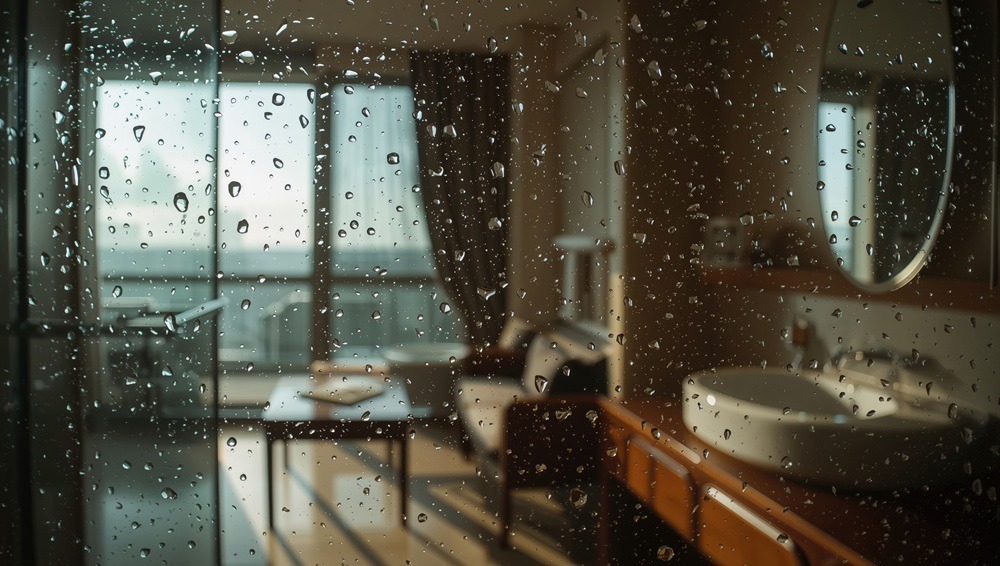
When you use your bathroom every day, multiple times a day, it’s easy to not notice things changing. Slowly, change will happen. The mirror is staying foggier, longer than it used to be. The ceiling bubbles near the shower. There is an ever-growing damp smell that shows up after steam that is never fully leaves.
Bathrooms are built to handle water, but they are not built to stay wet for prolonged periods of time.
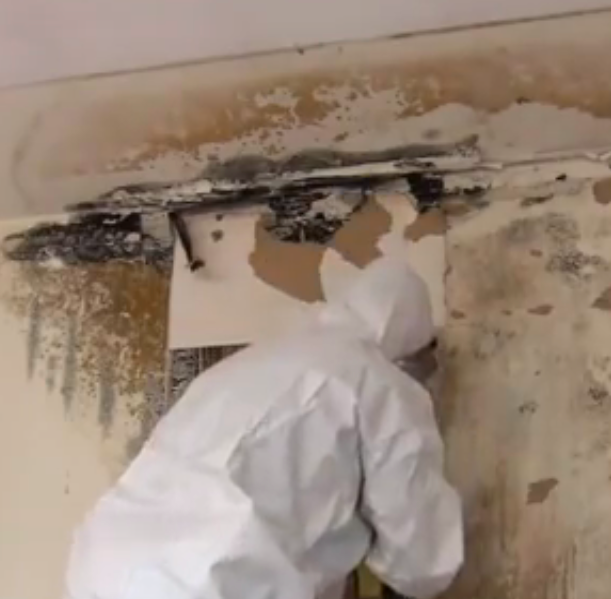
If you notice paint lifting or bubbling near the ceiling, it’s important to know the signs and how to fix peeling paint. This starts as a moisture issue first, so you should know the steps before you simply repaint over it.
So, what causes steam? Why does smell stick around? What actually fixes damage and changes the drying time, so you are not stuck in a repeat cycle? We will dive into all those questions here.
Why bathrooms trap moisture so easily
Steam is simple: water in the air.
When it cools back down, it turns into liquid.
In a bathroom, these reactions are happening constantly. Cool surfaces are all around: ceilings, walls, mirror, tile, even the back of the door. When there is nowhere for the moisture to go, it becomes a problem.
Common reasons a bathroom stays damp:
- The fan is weak, noisy, or rarely used
- The fan vents into an attic instead of outside
- The door stays shut after showers
- Towels and bathmats stay piled or never fully dry
Quick signs the bathroom is not drying out
These are the clues people notice without trying:
- The mirror stays foggy 20 to 30 minutes after a shower
- Paint looks swollen, bubbled, or soft near the ceiling
- A musty smell returns fast even after cleaning
If you have two or more of these, the room is damp for too long.
What peeling paint is really telling you
It feels like paint peeling should be an issue with the paint itself. Most of the time, this is not the case. It’s caused by a secondary issue. Moisture being the most common. When trying to remedy a bathroom issue, most people think if you paint over something, it will go away. But then people repaint, and it fails again.
Here is the part that saves time: repainting does not fix moisture. It only hides it for a short while. Many instances of bathroom painting fail because the surface never fully dries before the next coat goes on. There are many interior painting mistakes to avoid, and preparation matters more than the paint brand.
Common reasons bathroom paint peels
- Fan not used long enough after showers
- Paint applied over old peeling paint without proper scraping and sanding
- Walls cleaned but not fully dried before painting
- No primer, or wrong primer
The good news: once the bathroom dries faster, paint lasts longer and the smell drops off.
The smell that won’t leave, what it usually is
Smells happen when moisture sits in places that do not dry. If you’d like to freshen up your bathroom, there are simple steps you can try to help achieve this.
The usual culprits:
- Damp towels and washcloths
- Bathmats that stay wet underneath
- Caulk lines that hold moisture
- A small leak under the sink or at the base of the toilet
The smell that shows up after a shower is a moisture signal. Strong cleaner can mask it, but it does not change what caused it.
Quick fixes that actually change the drying time
This is where you win back control. Small habits are the difference between a bathroom that dries and one that stays wet.
Run the fan longer than you think
Turn it on when the shower starts and keep it running for 20 to 30 minutes after. If your fan is loud or weak, people avoid using it. That alone can keep the room damp every day.
Let the room breathe
Crack the door after showers. If you can, open a nearby window for a short time. Steam needs a path out.
Stop the “wet pile” pattern
Hang towels so air can move through them. Spread out the bathmats and let them dry. If you pile damp fabric, you are storing moisture in the room.
Keep surfaces open to dry
After showering, leave the curtain open, or leave the shower door cracked. Trapped moisture clings to the same surfaces every day.
Re-caulk only when the area is dry
If you seal moisture in, it stays in. Clean the area, let it dry, then re-caulk.
A simple dry-out test
After a shower, time how long the mirror stays foggy. If it stays foggy longer than 20 to 30 minutes, the room is not clearing moisture fast enough. That is the core problem to solve.
When repainting is worth doing, and when it is a waste
Repainting is worth it when the bathroom can stay dry.
Repainting is a waste when:
- Paint is still peeling in multiple spots
- The ceiling has stains that spread
- The smell returns right after cleaning
- The fan is not working well
If you repaint before fixing moisture, the new paint becomes the new layer that peels.
When it is time to repaint:
- Scrape loose paint until the surface is solid
- Sand edges smooth
- Clean and fully dry the surface
- Prime where needed
It is not fancy. It is just doing it in the right order.
The pattern changes people miss
A damp bathroom is not only about humidity. It can also be about routines.
Fans stop getting turned on. Towels stop getting hung up. Shower time gets longer. Laundry backs up. Cleaning is becoming less frequent. Then moisture and smells have more time to settle in.
No one does this on purpose. It happens slowly, and it looks like a “normal life” until it reaches a boiling point.
Bathrooms are also a higher-risk room. Wet floors, slick tubs, and rushing to clean up a spill can lead to falls. That is why it is worth taking the early signs seriously, even if the problem feels cosmetic. It’s important to pick up these signs early to prevent injury or crisis.
When home maintenance gets harder to keep up with
Even when the fix is straightforward, the hard part is staying consistent. When the to-do list keeps growing, the small safety habits go first. That is how a damp bathroom becomes the new normal.
If a loved one is having issues in the home, like a bathroom that never seems to dry, laundry piling up, or basic upkeep that’s starting to slide, it may be time to consider in-home care services. At home caregivers can help keep routines steady and reduce safety risks for the elderly, disabled, or after a surgery or injury.
Finding out what a caregiver can help with in the home can be beneficial for many families. This guide includes practical support that can help the home feel safer day to day.
The goal is not a perfect house. There are fewer repeat problems that create stress and increase risk.
FAQ
Why is my bathroom ceiling paint peeling?
Bathroom paint peels when moisture sits too long. This often happens when a fan is not used long enough, surfaces don’t fully dry, or paint was applied incorrectly.
Why does my bathroom smell musty after I shower?
Must and odor typically come from moisture, staying in towels, mats, grout, or hidden spots. This smell fades when rooms are optimized for drying.
How long should a bathroom fan run after a shower?
Run it during the shower and for 20 to 30 minutes after. If the mirror stays foggy much longer than that, the room is not clearing moisture well.
Can peeling paint in a bathroom mean hidden moisture?
Yes. Peeling paint can be the first visible sign of moisture behind paint, near the ceiling, or around vents and corners. It can also point to a small leak.
What is the fastest way to dry out a humid bathroom?
Use the fan longer, crack the door, hang towels to dry, and keep the shower area open to air out. Small changes that reduce drying time make the biggest difference.
When should I repaint a bathroom ceiling?
Repaint after the bathroom dries out faster and any leaks are resolved. If the room stays damp, new paint will peel again.
What cleaning steps help a smell that keeps returning?
Wash towels and mats often, clean grout and caulk lines, and dry surfaces after cleaning. Cleaning works best when the room also clears moisture quickly.
When does a damp bathroom become a safety concern?
When floors stay slick, smell worsens, paint keeps peeling, or upkeep starts slipping. Damp rooms also increase slip risk, which matters most in bathrooms.
Key takeaways
Steam that lingers can cause paint to peel and smell to stick around. The fix is simple: faster drying, not trying to cover up cosmetic issues. Strong cleaners and multiple coats of paint may mask issues in the now, but long term will lead to bigger ones. Knowing how to use your fan, how airflow works, and changing hygiene habits will work faster than any product. When upkeep gets harder to manage you or a loved one, extra support may keep smaller issues from turning into bigger ones.