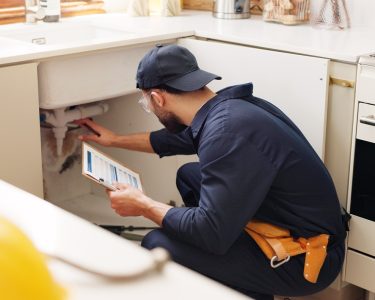


You’re ecstatic about the gorgeous new tile, fixtures and paint colors you’ve already picked out for your bathroom remodel. And it’s gone in an instant when your plumber opens up the wall. Bathroom remodel plumbing doesn’t cross most homeowners’ minds, until something needs to move. The layout behind those walls determines what’s possible, what’s expensive, and what needs to be rethought before anything is finalized.
Quick Answer
Bathroom remodel plumbing costs range from $750 for a simple half-bath to $15,000 or more when fixtures move or a slab foundation requires concrete cutting. Any work involving new lines or fixture relocation usually requires a permit.
When Bathroom Remodel Plumbing Gets Complicated
Simple, straightforward changes like replacing a faucet or toilet don’t require much plumbing. Changing the layout is what complicates bathroom remodels.
Move a fixture even a foot, and the system behind it has to move too. That means new supply lines, rerouted drains, and often adjustments to the vent stack.
A layout that looks simple on paper can carry hidden costs once pipe routing is considered, especially if it involves structural obstacles or long runs. Bringing in licensed residential plumbers in Northern New Jersey before the layout is locked helps surface those costs before they’re locked into a design.
Keeping Fixtures in Place vs. Moving Them
If the toilet, sink, and shower stay put, there’s not much plumbing work involved in replacing and reconnecting the new fixtures. The job stays predictable.
But the scope changes when the layout does. Pipes have to be cut in, sloped correctly, and tied back into the existing system.
The decision between a walk-in shower and a bathtub is a good example of where layout thinking and plumbing reality have to meet. Shifting a shower a few feet to gain space for a vanity might seem like a design win, but the plumbing required to support that change can outweigh the benefit. This is where a contractor coordinating the full scope will usually pause the conversation and bring in a plumber before finalizing any decisions.
The Concrete Slab Problem: Why It Changes Everything
Plumbing changes depend heavily on the type of foundation under a home. For example, a home with a raised foundation has crawl spaces. Plumbers can use those to reroute drain lines from below without disturbing finished surfaces.
Homes built on concrete slabs work differently. Moving a drain means cutting into the slab. That introduces jackhammering, removal, and patching into what was supposed to be a simple plumbing change.
Figure out which type of foundation you have before starting any remodeling project. Keeping that knowledge in your arsenal helps with cost and feasibility.
Rough-In Plumbing Happens Before You See Results
One of the first surprises for homeowners is how much work happens before anything looks finished.
Rough-in plumbing is the stage where pipes, drains, and vent connections are installed before walls close. Fixtures come later.
If the layout has changed or a new bathroom is being added, rough-in comes first, followed by inspection. That inspection is why walls often stay open longer than expected.
What Actually Runs Behind Your Walls
A working bathroom runs on three systems working in tandem. Supply lines bring hot and cold water to each fixture. Drain lines carry wastewater away and must be sloped correctly. Too shallow and waste sits in the pipe. Too steep and water outruns solids, leaving buildup that turns into clogs. Vent stacks allow air into the system so drains flow properly instead of gurgling or slowing down.
All three have to be right before the wall closes. If one is off, fixing it means opening everything back up.
Why Walls Have to Open Before the Real Work Starts
There’s not a lot of space inside a wall. Pipes, electrical wiring, and ductwork all have to share that space. When a plumber runs new lines, those constraints dictate the route. If ductwork blocks the most direct path, the pipe run gets longer. That means more fittings, more labor, and more cost.
The sequencing matters. Plumbing comes first, then drywall, then tile. Remodeling teams that coordinate across trades build this sequence into the project plan from the start. Starting finishes before plumbing passes inspection usually leads to rework.
How Much Bathroom Remodel Plumbing Actually Costs
Costs depend almost entirely on scope.
According to Angi, rough-in plumbing for a new bathroom addition runs $8,000 to $12,000 for plumbing alone. Fixr places the average full remodel with fixtures staying in place at $5,302, with smaller jobs starting around $750.
Once fixtures move or slab work is required, costs can exceed $15,000. Plumbing is rarely the only budget surprise in a remodel — unexpected bathroom renovation costs tend to compound once walls are open.
The largest fraction of those costs is usually labor. The U.S. Bureau of Labor Statistics reports a median annual wage of $62,970 for plumbers, which helps explain why labor consistently makes up a significant share of total project cost.
One decision drives costs more than most others: moving the toilet as it has the most complex plumbing. It is also one reason plumbing tends to be the most expensive part of a bathroom remodel when layouts change. Even a small relocation requires rerouting the waste line, extending supply, and adjusting vent connections. On raised foundations, that might fall in the $2,500 to $3,500 range. On slabs, concrete work adds to that.
The drain must maintain a precise slope to function correctly. Get that wrong, and the system will fail inspection or create long-term clogging issues.
Copper vs. PEX: What Actually Gets Used
Most residential plumbing today comes down to two materials: copper and PEX.
Copper is durable and long-lasting but more expensive. PEX is flexible, faster to install, and more forgiving in tight spaces.
In practice, most plumbers default to PEX for remodel work unless local code or homeowner preference dictates otherwise. The decision often comes down to accessibility, cost, and how invasive the installation needs to be.
Do You Need a Permit for Bathroom Remodel Plumbing?
In most cases, yes.
New supply lines, fixture relocation, or any change to the drain-waste-vent system usually requires a permit. Simple replacements in the same location usually do not.
Permits trigger inspections. Inspectors check slope, venting, and code compliance before walls can close.
Skipping this step carries real consequences. Insurance claims tied to unpermitted work may be denied, and issues often surface during home sales.
A fully licensed plumbing contractor usually handles the permit process. If someone suggests skipping it for major work, that’s worth questioning.
Questions to Ask Before the Project Starts
You can avoid many of the most expensive surprises by asking the right questions early.
- Are we keeping the existing layout, or will any fixtures move?
- Does this project need a permit, and who handles it?
- What type of foundation does the home have?
- What pipe material will be used, and why?
- How long will walls need to stay open for inspection?
- Are there existing pipes worth replacing while access is available?
These timing and scope questions shape everything that follows. If you haven’t settled on a contractor yet, it’s also worth knowing how to find a trustworthy residential plumber before those conversations start.
Frequently Asked Questions
How much does plumbing cost for a bathroom remodel?
Costs range from about $750 for small updates to $5,000 or more for full remodels, and $15,000+ when layouts change or slab work is required.
Do I need a permit to redo plumbing?
Yes, if the work involves new lines, relocation, or system changes. Minor replacements usually don’t need one.
Can I keep my toilet in the same spot to save money?
Yes. Keeping it in place avoids rerouting the main waste line, which is one of the most labor-intensive parts of the job.
What is rough-in plumbing?
It’s the first phase of installation, where pipes and drains are set before walls close and fixtures are installed.
How long does plumbing take in a remodel?
Rough-in usually takes one to three days. Final connections often take another day, depending on complexity.
Does a slab foundation increase cost?
Yes. Moving plumbing in a slab requires cutting and repairing concrete, which adds labor and time.
Should I replace old pipes during a remodel?
If aging or deteriorating pipes are exposed, replacing them at that point is usually more cost-effective than waiting.
Plan the Plumbing Before You Plan the Design
Most of the decisions that affect plumbing happen before demolition starts. Fixture placement, foundation type, and pipe condition all shape what’s possible.
For homeowners planning a remodel in the Charleston area, LITN Home Improvements coordinates design and construction so plumbing considerations are addressed before work begins.
For projects across Northern and Central New Jersey, Dawson Mechanical provides licensed plumbing support that aligns with remodel timelines and inspection requirements.
Getting those conversations started early is what keeps projects from going off track.
Sources
Angi — 2026 Rough-In Plumbing Cost Guide
Fixr — Bathroom Plumbing Cost Breakdown
Homewyse — Cost to Move Plumbing, January 2026
U.S. Bureau of Labor Statistics — Plumbers, Pipefitters, and Steamfitters